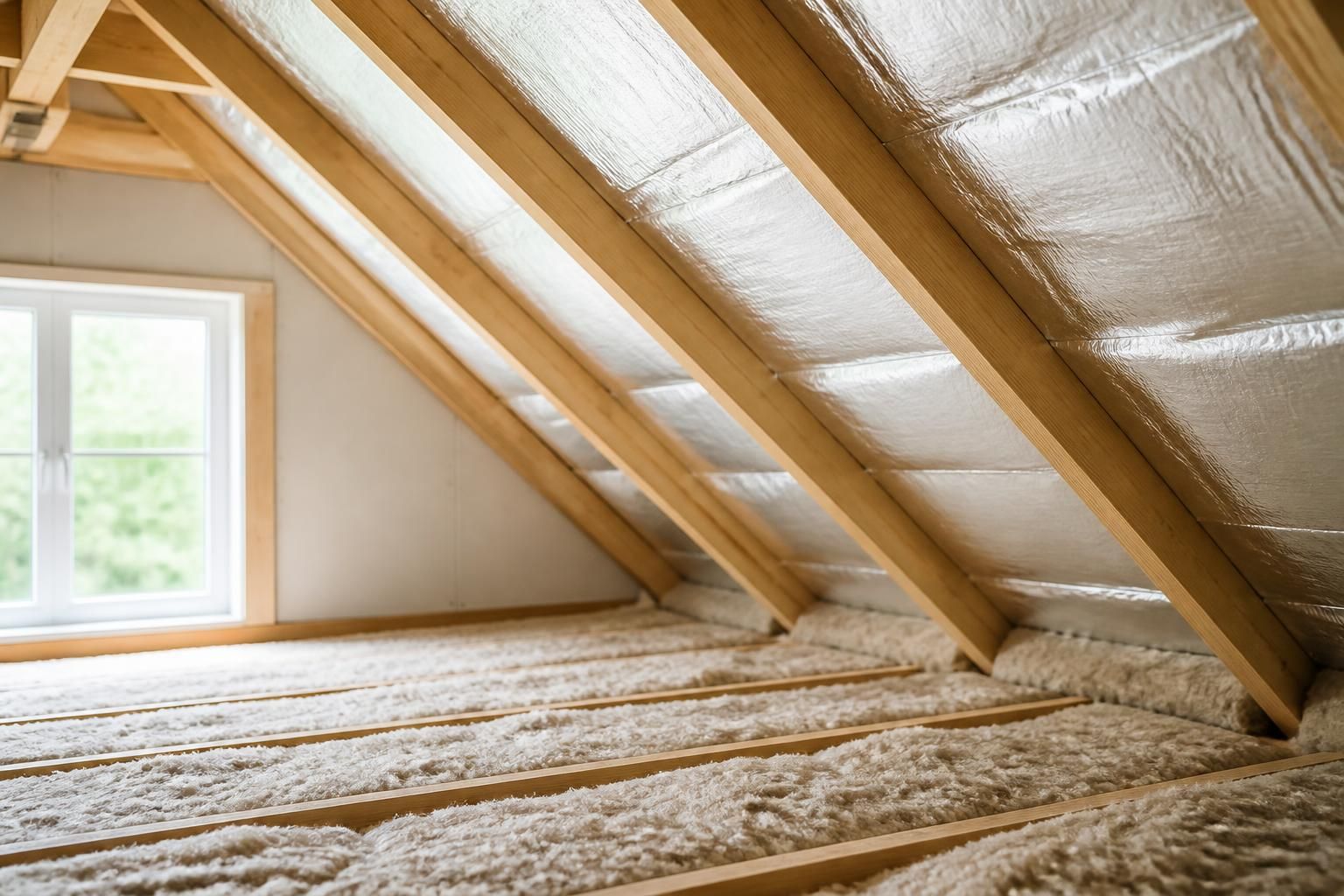
If your rooms feel hotter than they should by midday, the roof may be part of the problem. Heat builds fast, pushes down through the structure, and makes the whole space harder to cool.
That extra load can show up as uneven room temperatures, longer air-conditioning cycles, and a home that never quite settles down. Island Spray Professionals Limited helps reduce roof heat across Grand Bahama with spray foam insulation and reflective coating solutions suited to local building needs.
Roof heat does not always announce itself as a single obvious issue. It usually shows up as a pattern that gets worse when the sun is strongest.
These signs often point to weak roof insulation, poor thermal control, or a roof assembly that absorbs too much solar heat.
Sunlight does not need a visible opening to create indoor heat. Roof surfaces absorb solar energy, then transfer that heat downward through the roofing materials and framing. In a warm climate, that transfer can be relentless.
Darker or unprotected roof surfaces take on more heat. Once the surface warms up, that heat travels into the building layers below.
Warm air rises, and attic or roof spaces can trap that heat if insulation and coating layers are not doing enough to slow transfer.
Traditional insulation can leave seams, voids, or weak spots. Those gaps allow heat to move through faster than most homeowners expect.
Roof heat reduction works by slowing that transfer, reflecting more solar load, and sealing paths that let warmth spread indoors.
Island Spray Professionals Limited uses spray polyurethane foam and elastomeric coating solutions to reduce heat gain at the roof level. The right setup depends on the structure, roof condition, and how the space is used.
We start by looking at where heat is entering most heavily. From there, we recommend a roof heat reduction method that can help lower indoor strain and improve comfort over time.
We focus on practical changes that can make a real difference to indoor comfort, especially where cooling costs matter and roof exposure is intense.
Spray foam is useful for heat reduction because it expands to fill spaces that other materials often miss. Instead of leaving many small gaps, it forms a continuous layer that resists heat movement.
Once applied, spray foam fills cracks, joints, and irregular surfaces, which helps reduce thermal leakage through the roof assembly.
Spray foam provides strong insulating performance per inch, making it a smart option where roof space is limited.
It can be used for attics, ceilings, walls, subfloors, and other areas where heat is entering a building from above or around the envelope.
For many Grand Bahama properties, that combination of coverage and performance makes spray foam a practical choice for long-term roof heat reduction.
Roof heat reduction is not only about insulation thickness. Surface treatment matters too. Reflective and elastomeric coatings help manage the first wave of heat before it drives deeper into the roof.
These coatings are often used over SPF or existing roof surfaces to support temperature control and extend surface protection. They can also be selected in different materials and colors, depending on the application and roof conditions.
A good coating layer can help reduce surface temperature, limit UV stress, and support the roof system underneath. That matters when the roof spends long hours under strong sun.
When you contact Island Spray Professionals Limited for roof heat reduction, the process starts with a straightforward look at the structure and the symptoms you are noticing.
Because every roof is different, the goal is not to force the same answer onto every property. The goal is to reduce heat at the source with the right build-up for that building.
Roof heat reduction supports more than comfort. It can also improve how a building handles daily use across hotter periods of the day.
In Grand Bahama, where strong sun can drive indoor temperatures upward fast, a stronger roof thermal strategy can make everyday living more manageable.
Roof heat reduction is often viewed as a comfort upgrade, but it can also shape the way a property performs over time. When the roof absorbs less heat and the indoor space holds onto less warmth, the whole cooling load can ease.
That can mean less strain on air-conditioning, fewer hot spots, and a more stable indoor feel during the warmest parts of the day. It also supports a cleaner, more efficient roof system overall when the right coating or foam layer is used.
Island Spray Professionals Limited positions this work as an energy-efficiency improvement, not just a surface treatment. In a place where sun exposure is a daily reality, that distinction matters.
If rooms below the roof stay hotter than the rest of the house, especially during strong sun, the roof assembly may be transferring too much heat indoors.
Yes. Spray foam helps slow heat transfer, which supports steadier indoor temperatures across changing conditions.
They can help reduce surface heat gain, especially when used as part of a broader roof heat reduction plan.
Yes. Depending on the roof condition, coatings, foam systems, or insulation removal and replacement may be used to improve thermal performance.
No. Roof heat reduction can support comfort throughout the building by lowering the amount of heat that passes into occupied spaces.
Strong sun and cooling demand make roof heat control especially relevant here. A better roof thermal layer can help keep indoor spaces more manageable.
If the roof is making your home harder to cool, it is worth addressing before the problem keeps building. A targeted heat reduction solution can improve comfort without changing the character of the property.
For roof heat reduction in Grand Bahama, contact Island Spray Professionals Limited at +12427270047. We work from Shelly & Milton Street, Freeport, Grand Bahama, The Bahamas, Monday through Friday, 09:00 to 17:00.

Start Your Project
Share a few details about your roof, insulation needs, or coating project, and we will help you choose a practical solution for your property.